


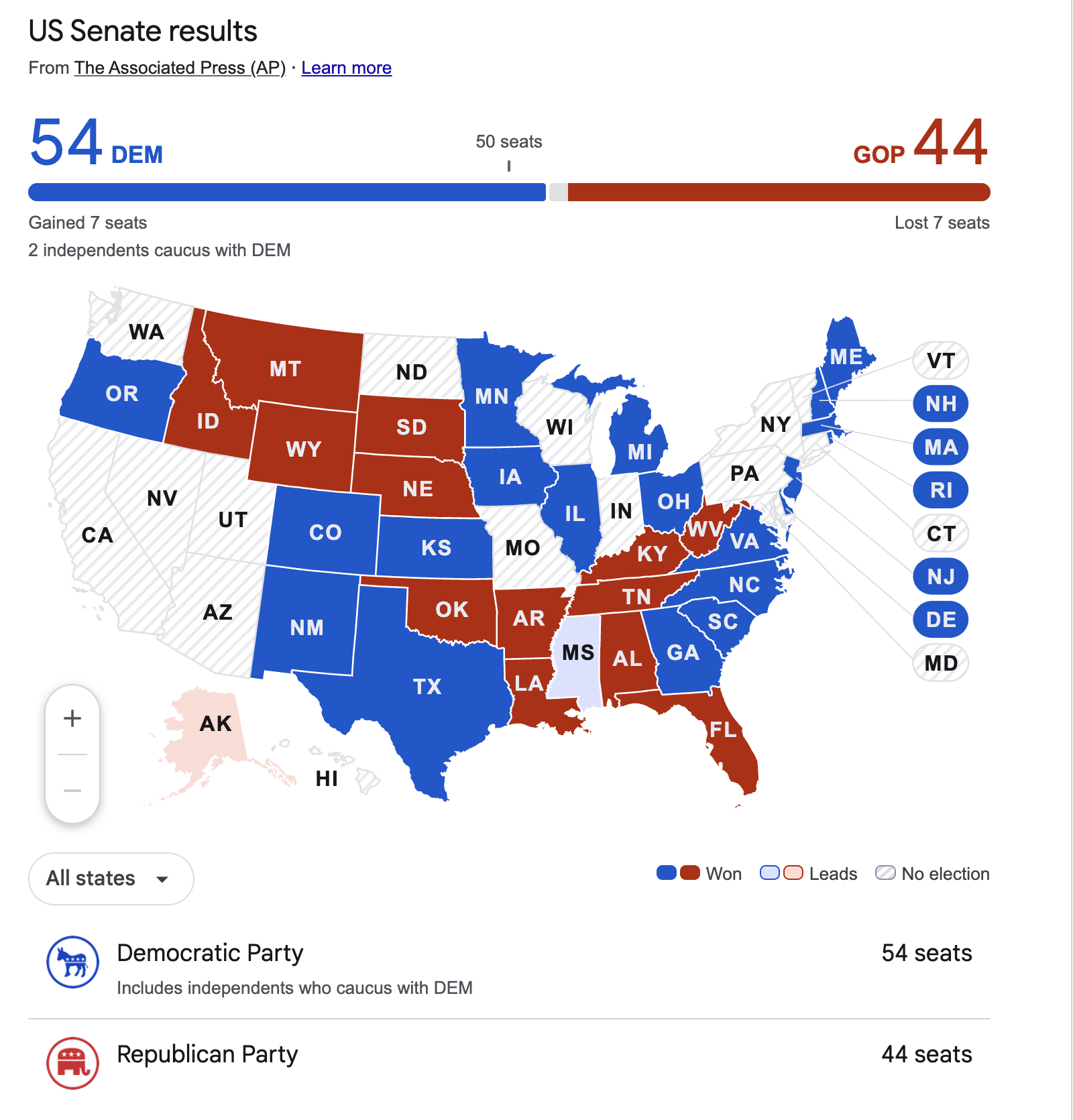
AMBENO (TOP) - The Republican Party of United States President Donald Trump has lost control of Congress in the midterm elections held on 3 November 2026, according to projections by American television networks. For Timor-Leste, which depends on the American market to sell its coffee and on development aid, the result does not change the situation quickly, but it could change the course of the debate in Washington over tariffs and aid.
Al Jazeera reports that the Democratic Party has won the House of Representatives, with the result announced late on Tuesday night, American time. The Democrats needed to gain five more seats to take the majority from the Republicans. The Democratic leader in the House, Hakeem Jeffries of New York, will very likely be elected Speaker and replace Republican Mike Johnson. Some media outlets, including Khaleej Times and The Jerusalem Post, also report that the television networks projected a Democratic win in the Senate. However, ABC News said shortly before that control of the Senate had not yet been projected, and the final number of seats is still being counted.
Trump reacted with unusual calm. A Pakistani outlet reported that he said he would accept the result and work with the Democrats. He told Fox News that the Democrats had done a good job.
For Timor-Leste, coffee shows this risk most clearly. On 7 August, American tariffs of 10 to 40 percent began to apply to poor countries, including Laos, Myanmar, Nauru, Papua New Guinea and Timor-Leste. According to an analysis by the Council on Foreign Relations, coffee accounts for more than 85 percent of Timor-Leste’s exports to the United States, and Starbucks has been a major buyer year after year. One tariff-tracking site estimates that the average effective tariff on Timor-Leste’s products in 2026 is about 10%, but warns that part of that figure depends on a temporary surcharge. This means that coffee producers in the mountains could feel a direct impact if prices in the American market rise or demand falls.
The Democrats in Congress cannot remove these tariffs on their own, because trade policy is still controlled mostly by the White House. But a Congress not controlled by the president’s own party can hold hearings, challenge the authority behind the tariffs, and ask for relief for small economies like Timor-Leste. This is analysis, not a guaranteed outcome.
On aid, the Lowy Institute says the Trump administration halted more than $60 billion in development aid beginning in early 2025. The credit insurer Coface assesses that the withdrawal of USAID will have a limited impact on Timor-Leste, because American aid went mainly to NGOs and amounted to about 1.2% of Gross Domestic Product. Even so, this affects almost directly projects in health, education and civil society, which depend heavily on foreign aid. Congress controls the budget, so a Democratic majority could move to restore some of the aid. Such changes will take months, and the White House could oppose them.
Some commentary also says that the end of the Millennium Challenge Account does not mean weaker relations, if Timor-Leste shows good governance and strong performance, and that this could open the way to a second compact. The Millennium Challenge Corporation looks at governance records, so Dili’s record on transparency will count, not only diplomacy toward the new Congress.
According to a Congressional Research Service (CRS) report, the United States has given about $500 million in assistance to Timor-Leste since independence. The same report says that China built the National Parliament building, the Presidential Palace and the headquarters of the Ministry of Foreign Affairs. If the new Congress continues to pay attention to the Indo-Pacific, Timor-Leste could use this to regain American support, but that depends on Dili’s diplomatic effort.
Trump remains president, and he keeps much of the authority over foreign and trade policy until January 2029. The new Congress will be sworn in on 3 January 2027. Analysts are likely to see the most direct effects in budget legislation, oversight hearings and pressure on tariff and aid decisions, not an immediate change of direction.
The Government of Timor-Leste had not yet issued a public reaction at the time of publication.