


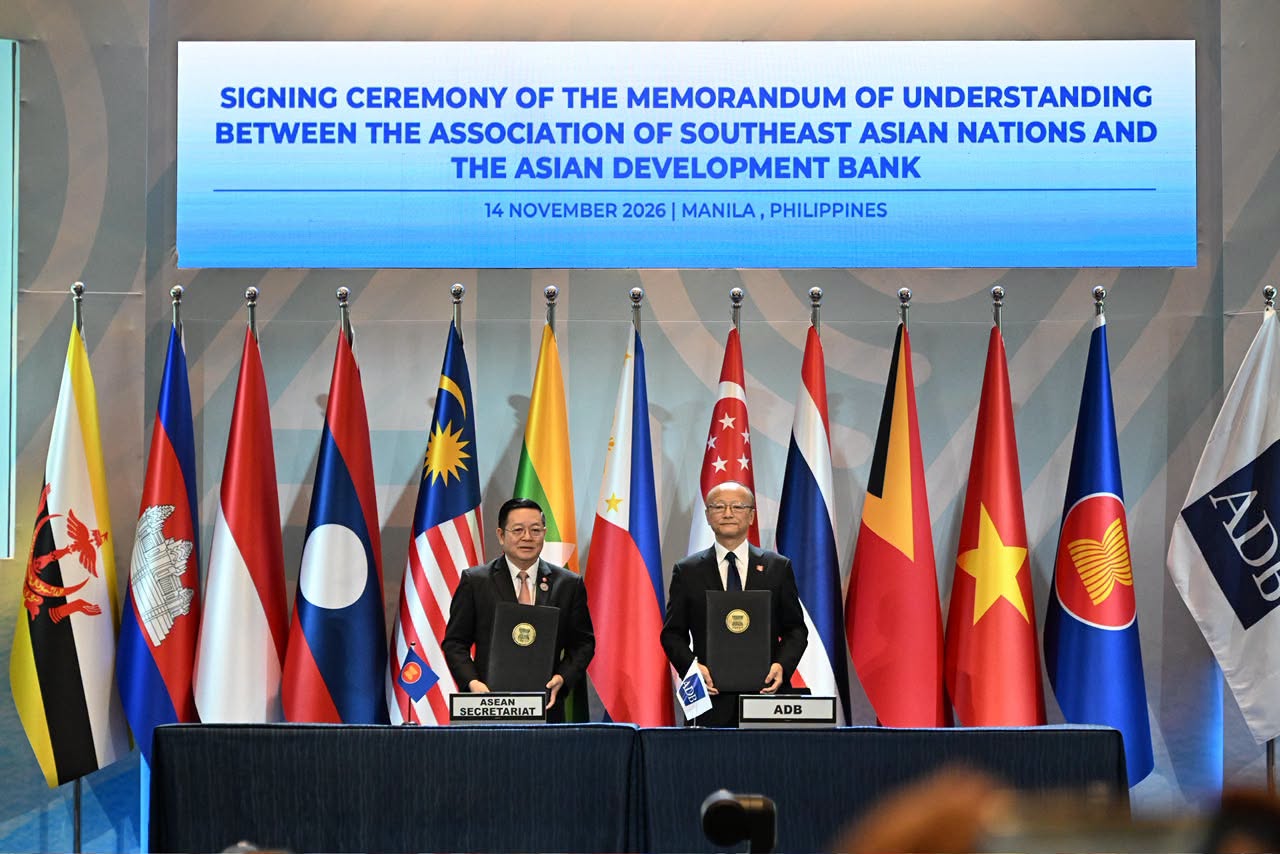
Francisco Kalbuadi Lay takes part in the 28th AEC Council Meeting and attends the ADB-ASEAN MoU signing ceremony.
MANILA/AMBENO (TOP) - The Asian Development Bank (ADB) has announced two new initiatives to mobilize up to $13 billion by 2030 for resilient rivers and the digital economy in Southeast Asia. Timor-Leste’s Vice Prime Minister was in Manila for a meeting of ASEAN economic ministers and for the signing of a new agreement between ADB and ASEAN.
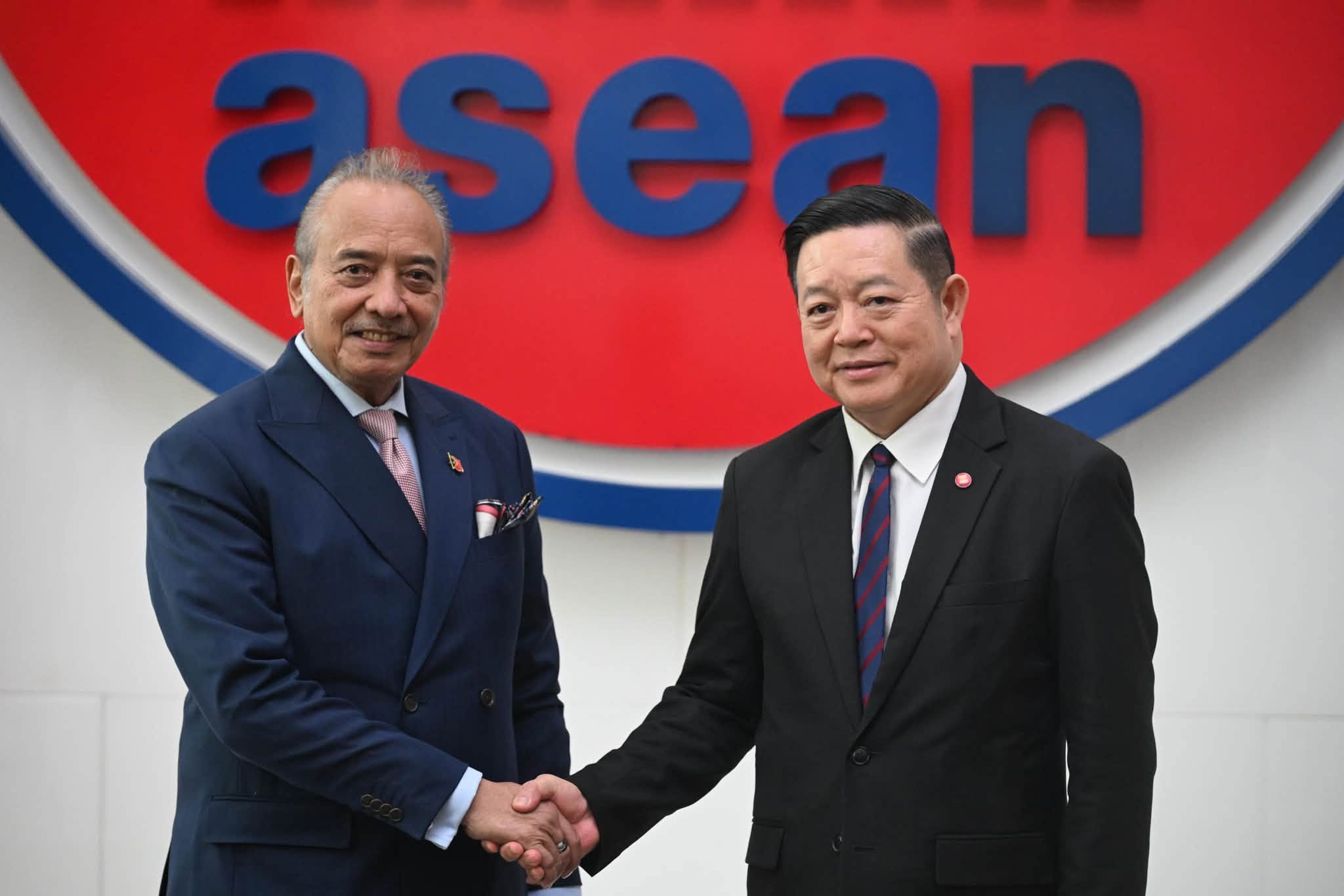
The Vice Prime Minister, Coordinating Minister for Economic Affairs and Minister of Tourism and Environment Francisco Kalbuadi Lay participated in the 28th ASEAN Economic Community (AEC) Council Meeting on Saturday. He also attended the signing ceremony of the memorandum of understanding (MoU) between ASEAN and ADB, where he joined other officials in the traditional group photo on stage.
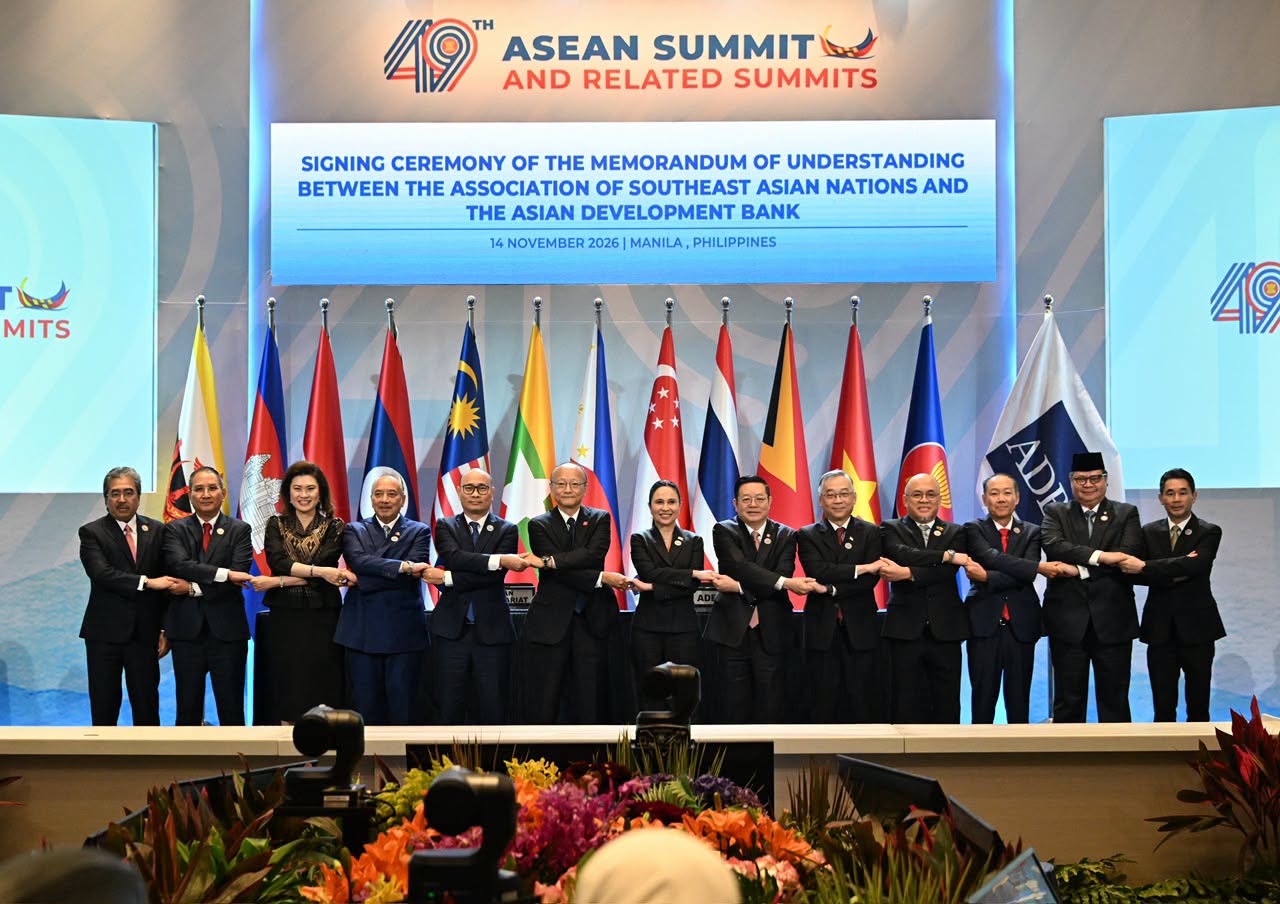
The AEC Council meeting prepared for the 49th ASEAN Summit and Related Summits, where the Philippines holds the 2026 ASEAN chair. It brought together representatives of ASEAN member states to coordinate and analyze strategic issues of regional economic integration, strengthen cooperation among members and promote implementation of AEC initiatives. Timor-Leste is ASEAN’s newest member.
ADB President Masato Kanda made the announcements in his address to the ASEAN Business and Investment Summit in Manila, held alongside the 49th ASEAN Summit. The two initiatives complete ADB’s $30 billion pledge to support ASEAN’s development priorities. Kanda also signed the new five-year MoU with ASEAN, which formally designates ADB as the region’s main bank.
“Rivers sustain economies and communities across Southeast Asia. Digital interoperability and trade are also a source of resilience, prosperity, and opportunity,” Kanda said.
“As the region’s main bank, ADB has pledged $30 billion to ASEAN to turn ambition into action. We will be judged by what gets built and by whose lives improve,” he said.
The ASEAN Resilient Rivers Initiative aims to mobilize up to $8 billion in public and private financing by 2030. Its goals are to strengthen water and food security and to reduce damage from floods and droughts. It will help countries coordinate investments in modern irrigation, flood defenses and water management across river basins. ADB says these investments will safeguard the food systems, water supplies, livelihoods and ecosystems that depend on healthy rivers.
The ASEAN Regional Platform for AI and Digital Economy targets up to $5 billion in public and private financing by 2030. It will support implementation of the ASEAN Digital Economy Framework Agreement, backing policy reforms and investment in:
- digital infrastructure;
- cross-border payment systems and verifiable IDs;
- cybersecurity; and
- AI readiness.
ADB says this will improve the interoperability of digital systems across the region and facilitate digital trade, especially for micro, small and medium-sized enterprises. The bank will also help governments identify bankable projects, support project preparation and mobilize financing.
The $30 billion pledge also covers previously announced initiatives on regional capital markets, power grid integration and the blue economy. These include a $6 billion capital markets initiative, a fund to prepare ASEAN Power Grid projects, and financing for healthier seas and coastal economies. Kanda first announced the package in Cebu in May.
ADB is also expected to renew its MoU with the ASEAN+3 Macroeconomic Research Office through 2031. The renewal would deepen cooperation on joint research, economic surveillance, capacity building and knowledge sharing to support financial stability and resilience across ASEAN, China, Japan and South Korea.
At the signing ceremony, ASEAN Secretary-General Dr. Kao Kim Hourn called the agreement “an important milestone in our longstanding partnership,” adding that it “reflects the enduring trust between our two institutions.”
“ASEAN has always been guided by the belief that cooperation is the foundation of progress,” Kao said. “Over nearly six decades, our region has transformed itself into one of the most dynamic and promising economic landscapes in the world.”
He said ASEAN, with a combined GDP of $4.3 trillion in 2025 and a population of nearly 700 million, “stands at a pivotal juncture, one defined by great opportunity, but also by significant challenge.”
“We live in an era of compounding uncertainties,” Kao said. “Disruptions are already being felt by our Member States, straining fiscal balances, inflating costs for our most vulnerable communities, and testing the resilience of the trade corridors on which ASEAN depends. We therefore welcome ADB’s readiness to support ASEAN Member States in advancing ambitious and impactful programmes, not only to deepen regional integration but also to strengthen regional resilience.”
On the $30 billion commitment, Kao said: “The commitment to mobilise USD 30 billion in support of ASEAN’s long-term development priorities is a powerful expression of that partnership. Whether it is deepening our capital markets, accelerating the ASEAN Power Grid, expanding artificial intelligence readiness, or protecting our blue economy or river basins, ADB is stepping up as a true partner in our collective endeavour.”
“The MoU we sign today reflects a shared commitment to translate ASEAN’s vision into tangible, people-centred outcomes, towards realising ASEAN 2045: Our Shared Future,” he said.
Kao thanked Kanda and the ADB team “for their generosity of spirit and their genuine commitment to this region.” He also thanked Philippine Trade Secretary Ma. Cristina A. Roque, who chairs the AEC Council this year, for “convening us in the spirit of partnership and progress that has always defined ASEAN.” Roque was represented at the ceremony by her chief of staff, Bianca Sykime.
Closing his remarks, Kao said: “As we affix our signatures to this MoU, let us do so with a clear sense of purpose: for strengthened cooperation, for unwavering stability, and for enduring hope and long-term partnership between ASEAN and ADB. Together, we will deliver.”
ADB, founded in 1966, has 69 members, 50 of them from the Asia-Pacific region.