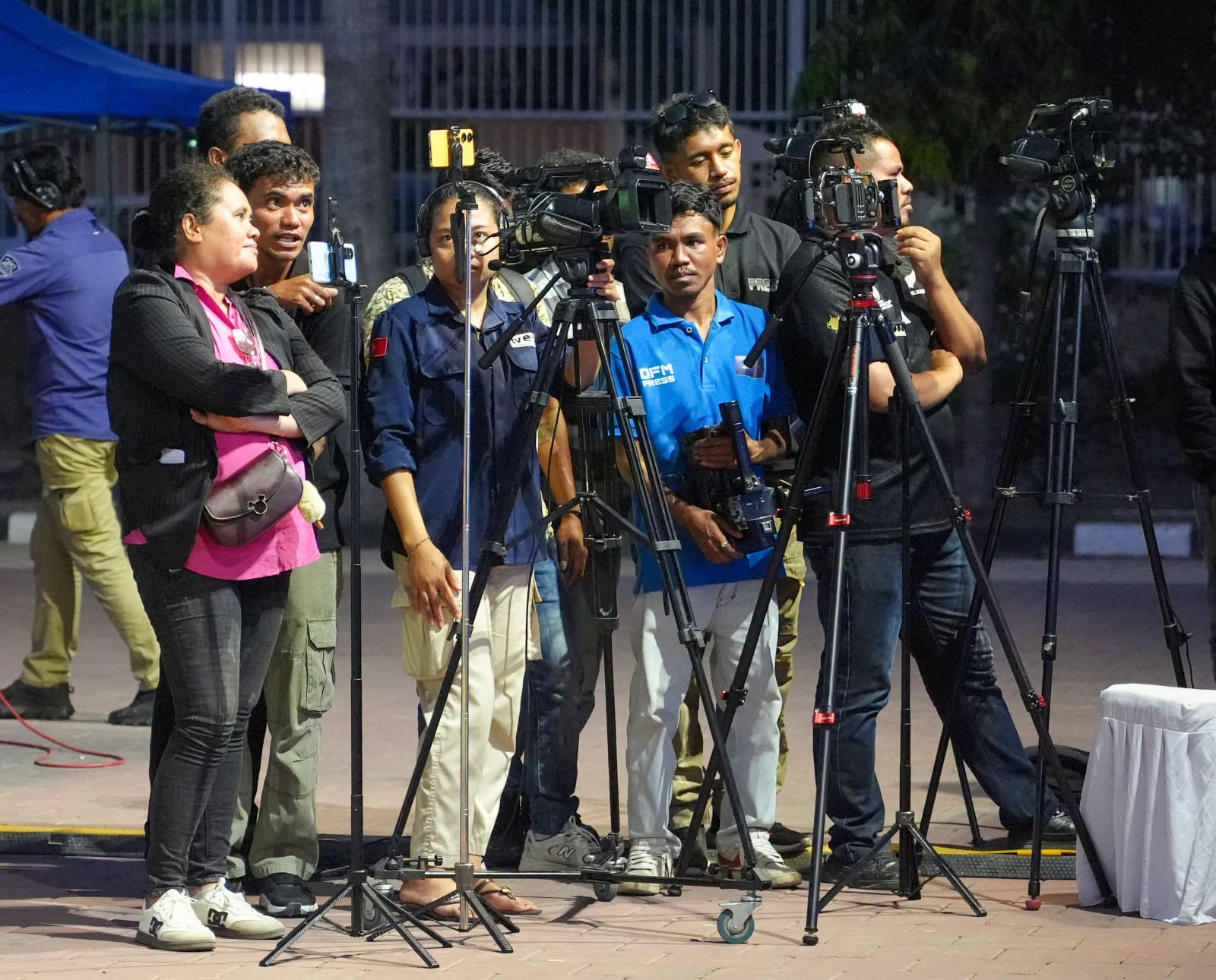



Six in seven murders go unpunished as drone strikes emerge as a deadly new threat to reporters in war zones. In Timor-Leste, ranked best in Southeast Asia for press freedom, the findings are a reminder that the gains are fragile.
PARIS/NEW YORK/AMBENO (TOP) - The global rate of impunity for killings of journalists has risen for the first time in more than a decade, and the growing use of drones in conflict zones is a new danger for the media, according to a new report from UNESCO.
The rate of unresolved cases reached 86 per cent in 2024-2025, one percentage point higher than in the previous two-year period. UNESCO has tracked the figure since 2012. In practice, about six of every seven killings of journalists go unpunished.
“Journalists are increasingly paying with their lives for reporting from the frontlines of war,” UNESCO Director-General Khaled El-Enany said, adding that those responsible are far too often not held accountable.
Deadliest period in a decade
UNESCO confirmed that 189 journalists and other media workers were killed in 2024-2025. That is 20 per cent more than in the previous two years and the highest toll since 2014-2015.
Of those deaths, 127, or 67 per cent, occurred in conflict zones.
The findings appear in the Director-General’s Report on the Safety of Journalists and the Danger of Impunity, published every two years to mark the International Day to End Impunity for Crimes against Journalists on 2 November.
Killings were recorded in every region, which the report called “a global scourge.” The Arab States had the most verified cases (97), followed by Latin America and the Caribbean (37), Asia-Pacific (34), Central and Eastern Europe (14), Africa (6), and Western Europe and North America (1). The State of Palestine had the highest number of killings in both years, 30 and 32 respectively.
Drones: a “disturbing new threat”
The report identified the growing use of drones to kill journalists as a “disturbing new threat.” Drone strikes killed 50 journalists in 2024-2025, or 40 per cent of all media workers killed in conflict zones.
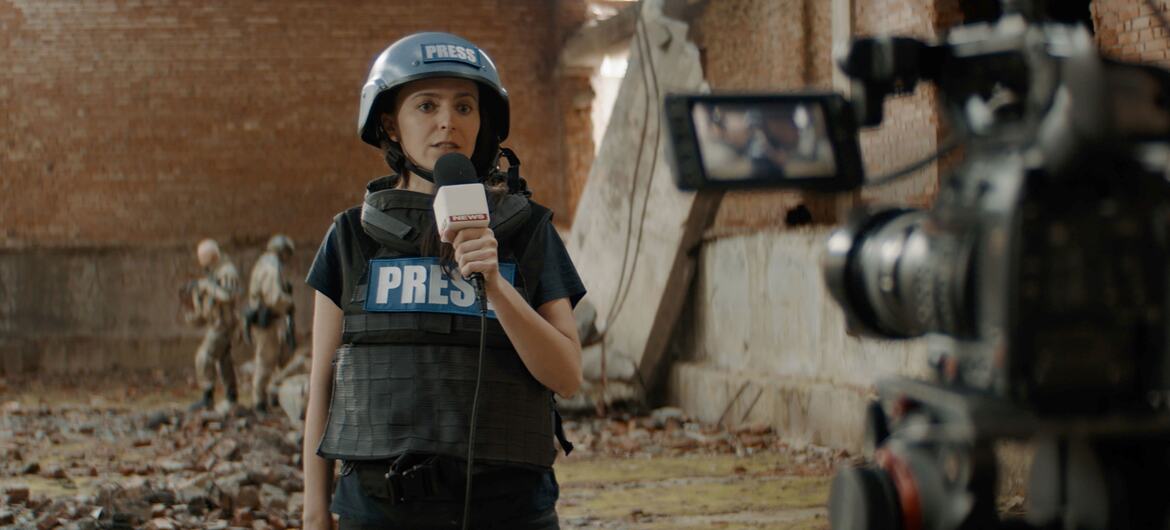
UNESCO documented seven incidents in which several journalists were targeted and killed in a single attack, including strikes on media workplaces and temporary reporting centres. Fifteen journalists were reportedly killed while wearing press vests or travelling in vehicles clearly marked “Press.”
“A heinous affront”
UN Secretary-General António Guterres said at least 34 journalists were killed over the past year. “In conflict settings, the rate of impunity is close to 100 per cent,” he said in his message for the Day.
He called the situation “a heinous affront” to victims, their families and everyone who depends on journalists to stay informed. “When journalists are targeted and their reporting is extinguished, it makes victims of us all,” he said, demanding justice.
El-Enany renewed a call for respect for UN Security Council Resolution 2222, adopted unanimously in 2015, which protects journalists, media professionals and associated personnel as civilians in armed conflict. The status was reaffirmed in the Pact for the Future.
Progress outside war zones
The report also noted progress in countries not experiencing conflict, where impunity has continued to fall. The rate declined from 94 per cent in 2012 to 77 per cent, roughly one percentage point a year.
“This demonstrates that when governments invest in investigations, prosecutions and protections for journalists, progress is possible,” UNESCO said.
Women journalists face particular risks
UNESCO said women journalists continue to face distinct dangers, in war zones and online. Thirteen of the 14 women journalists killed in the period were in countries experiencing armed conflict.
A 2025 study by UN Women and the International Center for Journalists found that 75 per cent of women journalists had experienced online or offline abuse and harassment. More than 40 per cent reported offline violence linked to online attacks, up from 20 per cent in a 2020 UNESCO survey.
“Across the world, journalists continue to pay an outrageous price for telling the truth,” Guterres said.
Timor-Leste: a regional high point, with weak spots
Most of the killings in the report happened far from Southeast Asia, but the findings carry weight for Timor-Leste, a young democracy that has become a regional reference point for press freedom.
Timor-Leste climbed nine places to 30th in Reporters Without Borders’ (RSF) 2026 World Press Freedom Index, released on 30 April.
Its score rose to 75.29, up from 71.79 and 39th place in 2025. It ranks first in Southeast Asia. The country was 10th in 2023 and fell to 20th in 2024.
RSF’s country profile shows where the strengths lie. Timor-Leste ranked 21st on the legal indicator, 21st on the social indicator and 25th on security. The profile also credits the division of executive power between a president and a prime minister with helping limit press freedom violations.
The economic side is weaker. Timor-Leste ranked 38th on the economic indicator and 41st on the political indicator. RSF has said most outlets depend heavily on government advertising because they lack diversified income, which leaves them vulnerable to political pressure. RSF’s 2025 assessment also noted cases in which journalists are paid by event organisers to attend press conferences.
President José Ramos-Horta has pointed to the ranking with pride. On World Press Freedom Day in May, he said the country’s history means it knows the cost of silencing the press, and that press freedom must be protected in practice, not just in statistics. After the 2024 drop, he had urged the Press Council and journalists to reflect on what caused the fall.
That caution matters because the UNESCO report shows how quickly conditions can change. The report credits progress in non-conflict countries to government investment in investigations, prosecutions and protections. For Timor-Leste, press freedom advocates say the test is whether the legal and security strengths translate into financially independent newsrooms that can investigate power without fear of losing government advertising, in the capital Dili and in outlying areas such as Oe-Cusse Ambeno.