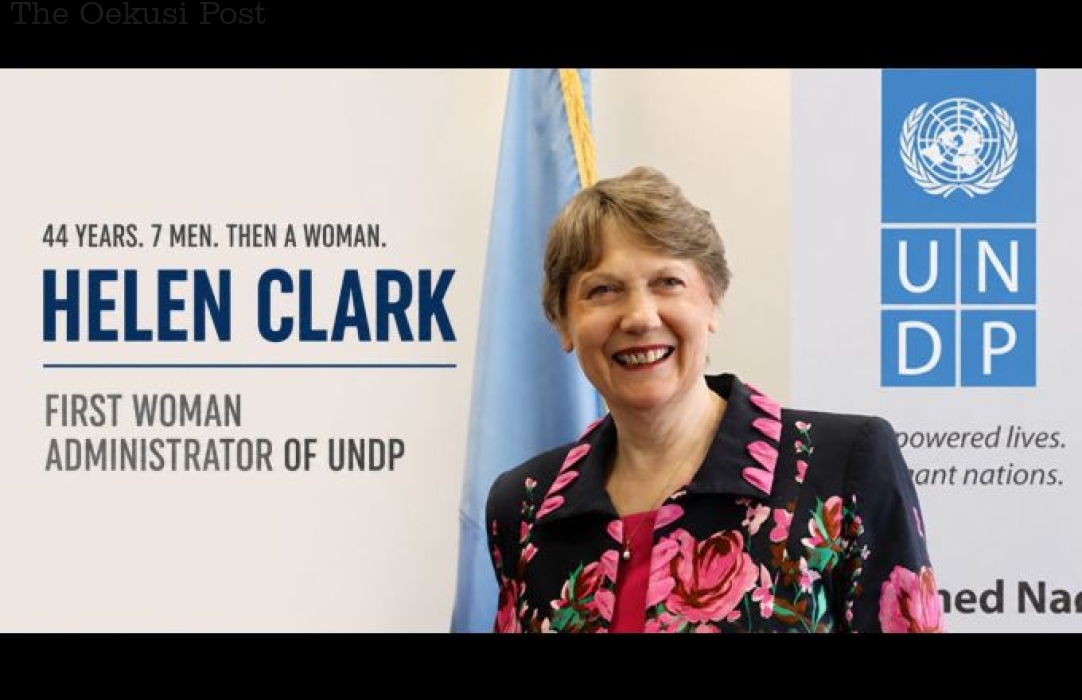
That is how long it took before a woman reached the top of UNDP, the UN's largest development agency.
In April 2009, Helen Clark became the first woman to hold the position of Administrator of the United Nations Development Programme. But she did not arrive as an outsider to leadership at the highest level.
In 1999, she became the first woman elected Prime Minister of New Zealand following a general election. She went on to serve three successive terms, from 1999 to 2008.
Then came a very different leadership challenge. But being the first woman is only one part of her story.
Helen Clark led UNDP for eight years, from 2009 to 2017, while simultaneously chairing the United Nations Development Group, bringing together the UN funds, programmes, agencies and departments working on development.
In 2016, while still leading UNDP, Clark was also a candidate for Secretary-General of the United Nations. She was one of seven women among the thirteen candidates considered that year.
Those years coincided with the transition from the Millennium Development Goals to the 2030 Agenda and the Sustainable Development Goals, a much broader and universal development framework.
UNDP had to adapt
Under Clark's leadership, its 2014–2017 Strategic Plan sharpened the organization's focus around a central ambition, helping countries eradicate poverty while significantly reducing inequalities and exclusion.
She also pushed strongly for greater transparency and accountability. In 2014 and again in 2016, UNDP topped the Aid Transparency Index among major development organizations.
I had the opportunity to serve under Helen's leadership as a UN Resident Coordinator and UNDP Resident Representative.
Later, when I served as the UN Secretary-General's G20 Sherpa, I also supported her participation as the UN representative at meetings of G20 Finance Ministers.
Those experiences allowed me to observe her leadership from two very different perspectives. From the country level and in one of the world's most important forums for international economic cooperation.
What distinguished her leadership was the experience she brought from having already governed a country. She understood development not only through programmes and projects, but through politics, institutions, public policy and the difficult choices governments have to make.
That combination is rare in international organizations. They often draw leaders from technical, diplomatic or institutional careers. Clark arrived with something different, the judgment that comes from having led a government, managed coalitions, faced elections and made decisions where the consequences were immediate and public.
Helen Clark broke an important barrier at UNDP in 2009.
But, as with so many of the women in this series, she was the first. What matters most, though, is what she did once she got there.
Lenni Montiel
Former UN Assistant Secretary-General