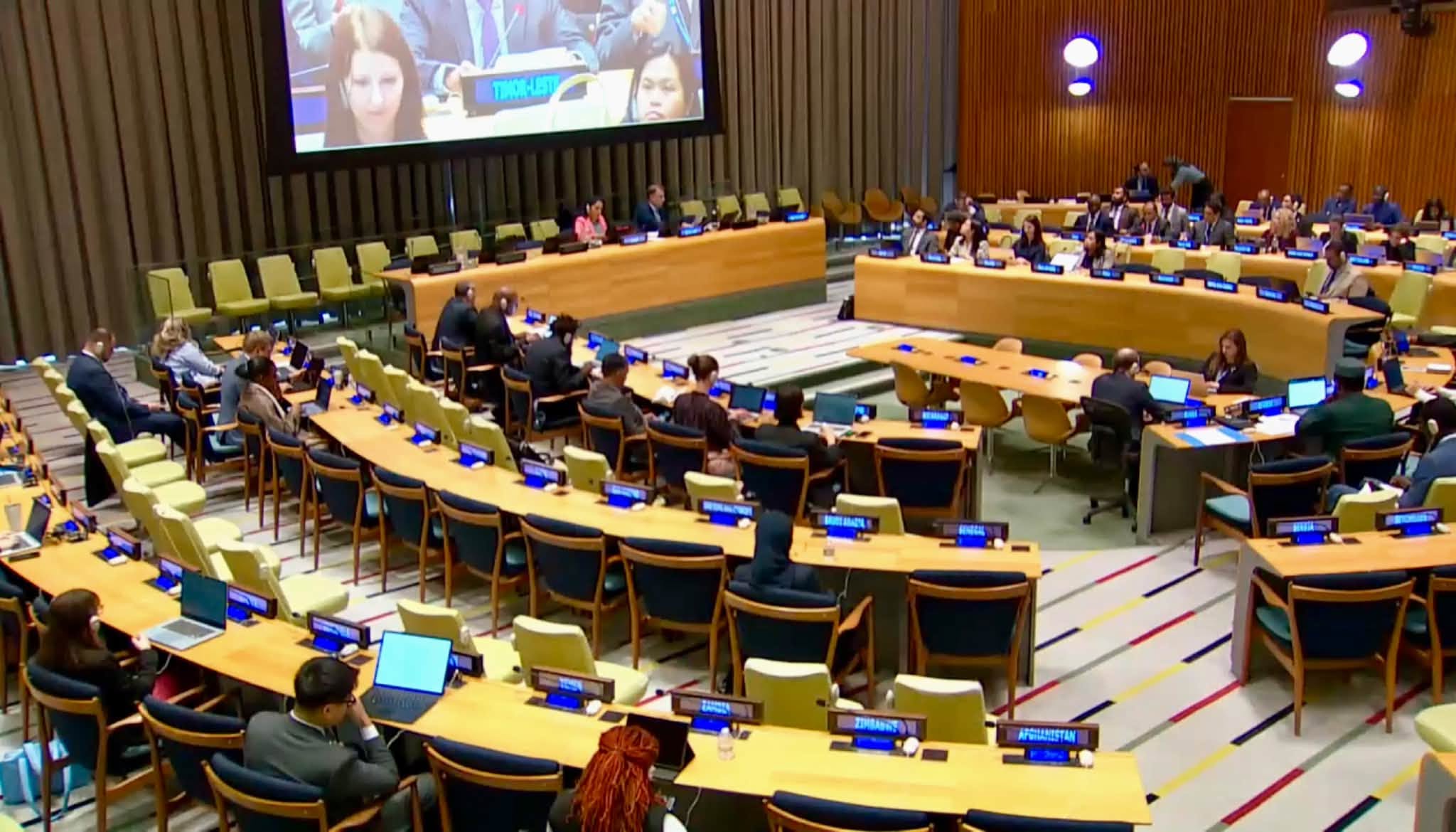



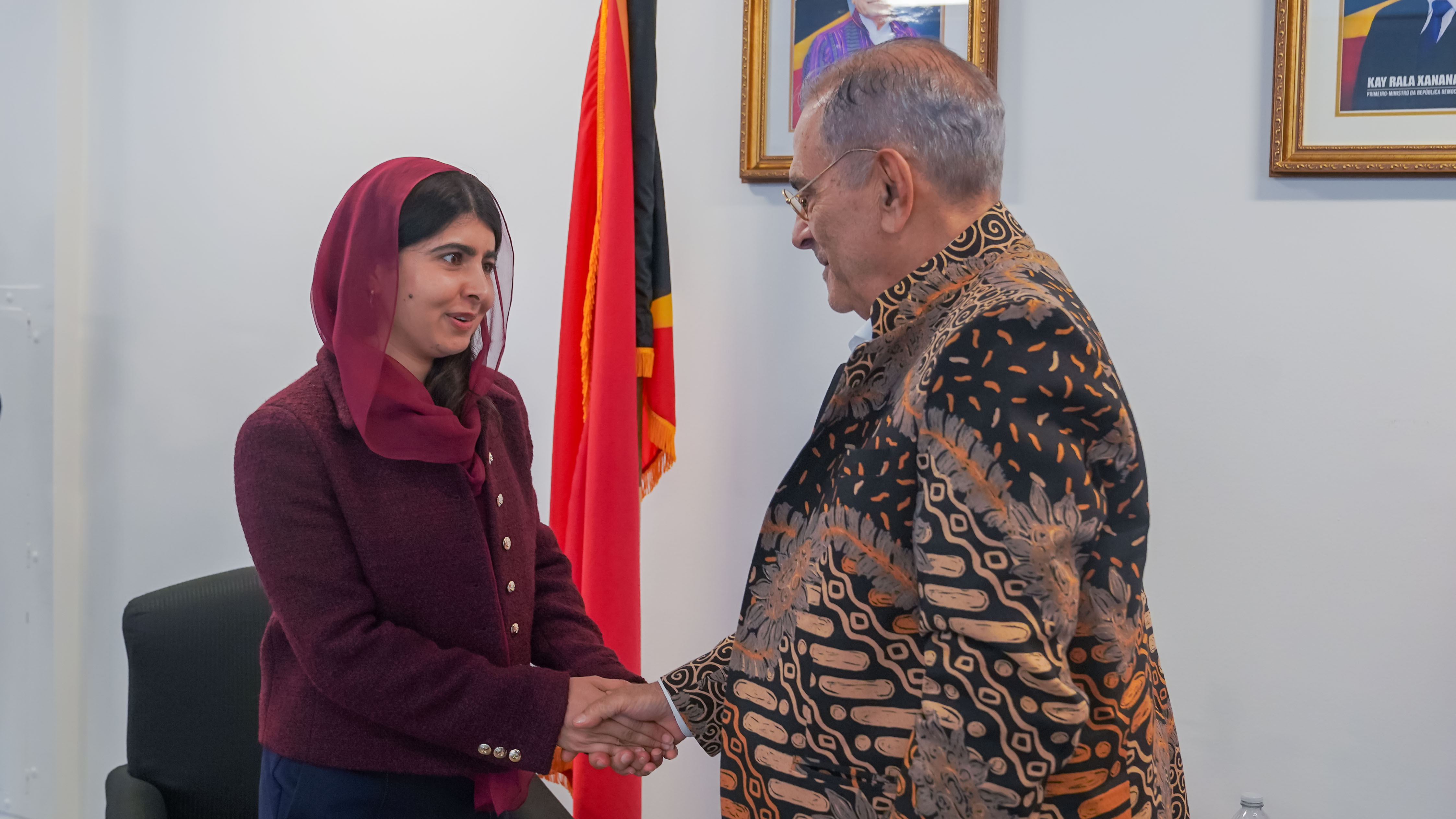
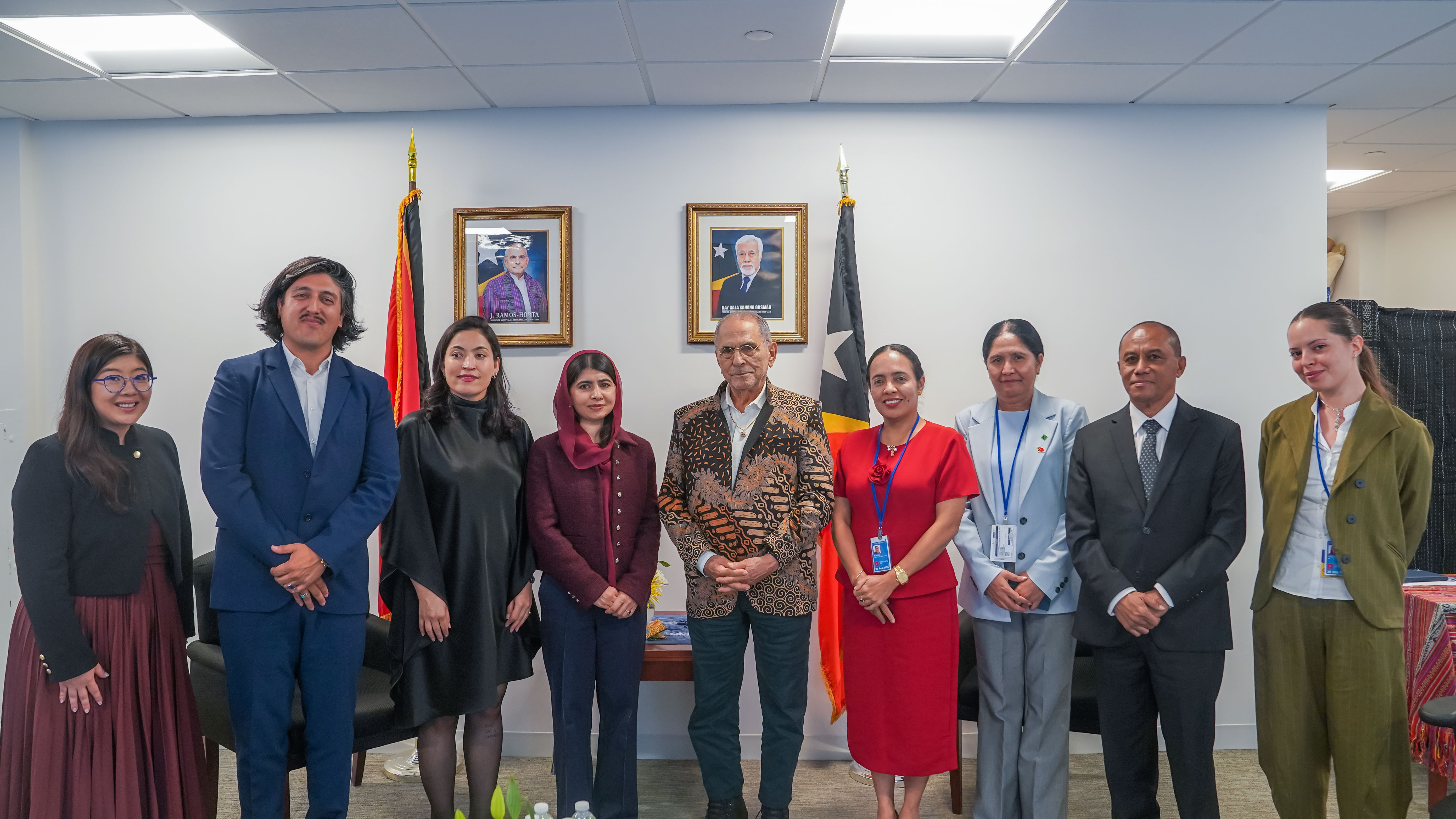
NEW YORK (TOP) - Just 15 years old, Malala Yousafzai was shot in the head for simply asking to go to school. At the age of 29, on Monday, September 21, 2026, she entered the building of the Permanent Mission of Timor-Leste to the UN, at 866 UN Plaza, Suite 587, New York, to ask one thing that Timor-Leste needs to put its voice with her, to continue to raise the fate of women and children's rights in the 18th session of the UN General Assembly.
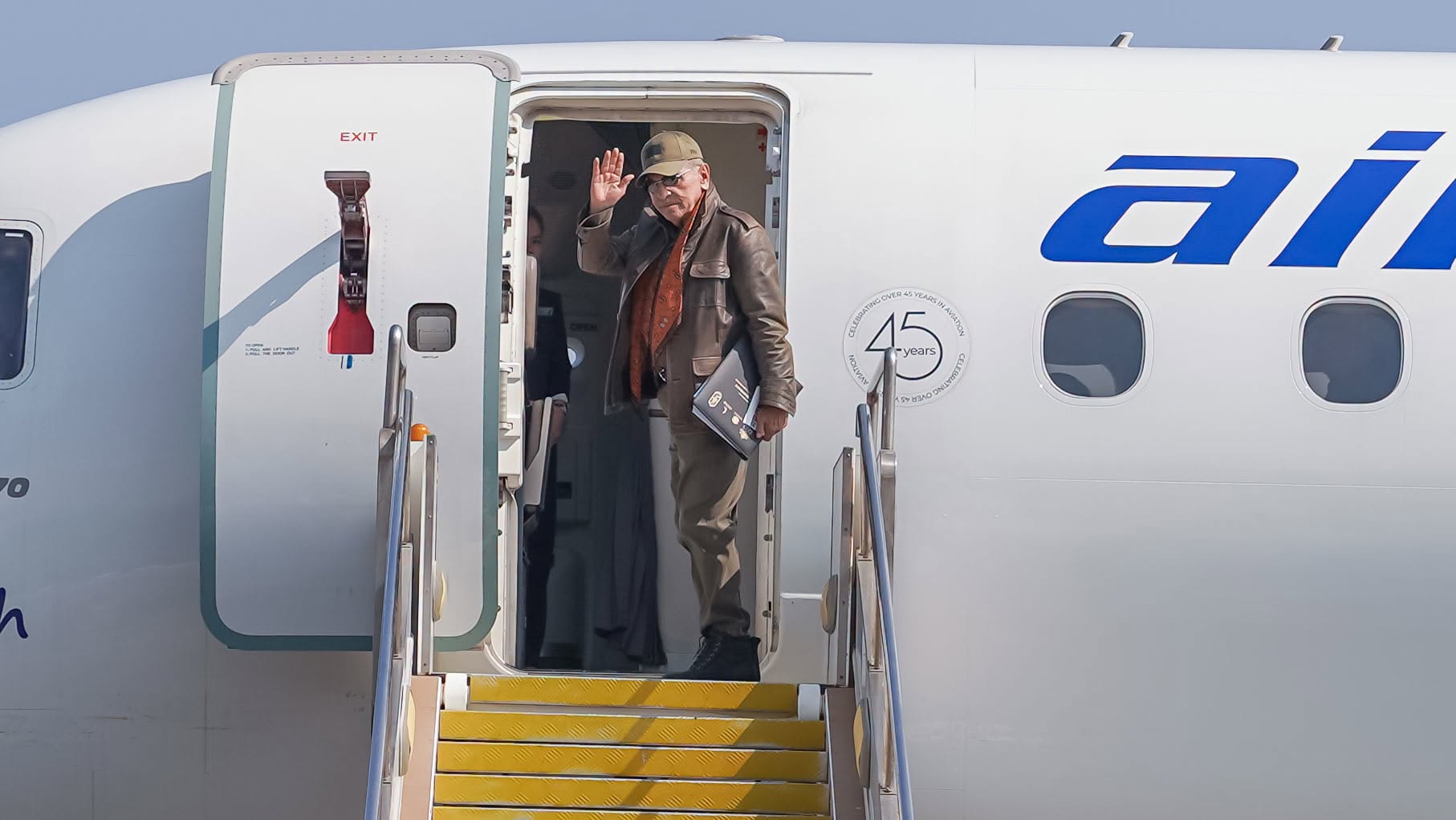
Inequality, asked Malala to show through her own life, still continue to flourish in some countries in the world. That is why the 2014 Nobel Peace Prize winner met with the current President of the Republic, José Ramos-Horta, to discuss common priorities and opportunities for future cooperation in the promotion of women's and girls' rights around the world.
President Horta responded with a clear commitment. He said that Timor-Leste "reaffirms its belief in multilateralism and its commitment to be a voice for small states, for children, youth, women and girls, and for a world governed by justice and international law."
Before becoming a world-renowned figure, Malala Yousafzai was a girl from Mingora, Swat Valley, Pakistan, born on July 12, 1997, into a family that believed strongly in education. Her father, Ziauddin Yousafzai, was an educator and activist, and was a great inspiration for Malala not to give up on school, even though the conditions were far from favourable.
When the Taliban controlled much of the Swat Valley and banned women from going to school, Malala, who was only 11 years old, began writing a blog for the BBC under a disguised name, telling about her life under the Taliban regime and defending the importance of education for women. From there, her voice became known and her courage to speak the truth became a global benchmark.
That courage comes at great risk. On October 9, 2012, at just 15 years old, a Taliban member shot her in the head inside a school bus. Malala suffered critical injuries, but survived after urgent treatment in Pakistan and continued recovery in the UK, Birmingham.
After recovery, Malala was not afraid to continue fighting for education for all girls, especially in conflict regions. Along with her father, she co-founded the “Malala Fund,” the organization that invests in women’s education programs in countries like Pakistan, Nigeria, and Afghanistan.
In 2014, at just 17 years old, Malala became the youngest Nobel Peace Prize laureate, sharing the prize with Indian child activist Kailash Satyarthi. She continued her education in the UK and graduated from Oxford University, with a degree in Philosophy, Politics, and Economics (PPE), in 2020, and wrote her story in the book "I Am Malala".
The meeting between Malala and President Horta in New York showed something important that the struggle for the right to education for women and children is not just the cause of one activist or one big country. Asked by a small country like Timor-Leste to unite, Malala acknowledged that all voices whether from small or big countries, it is important that each destiny of children's rights will become a reality.