


DILI (TOP) - Many people, particularly residents of the Aimutin area, have witnessed the transformation of the region. Previously, there were significant issues regarding the interaction between the community and transport access specifically involving motorcycles alongside infrastructure that was in very poor condition and difficult to repair. However, after the government began fulfilling its constitutional mandate in 2023, plans were promptly drawn up to beautify the national capital, aiming to give it a stunning appearance comparable to the capitals of other nations cities whose beauty often draws admiration from Timorese citizens when they travel abroad.
Many Timorese, both students, local and national entrepreneurs, foreign workers (UK, Australia, Korea) and others before landing at the airport, they have seen the capital of the country, the cities of the people. After seeing, each one said in his heart that, when the capital Dili can become like this, very beautiful. Everyone thinks and speaks in his own heart.
Responding to the demands of the Timorese who speak in their hearts, the current Government, which has faced various blows, is still making great efforts to improve the capital of Dili so that it can be as beautiful as the capital of the country that the Timorese have seen.
One effort is that the roads in the Aimutin area can be said to be a little better, and there is also a beautiful garden. Those who live in Aimutin have seen this small park. All these things are done using the people's money, using the General State Budget (OJE).
The construction of a park in Aimutin is new, the communities in Aimutin and the capital of Dili are already using it with the people's money. It is true that the park is a government campaign to make the capital cleaner and more organized, it is to be a small, uncontested addition to the cityscape.
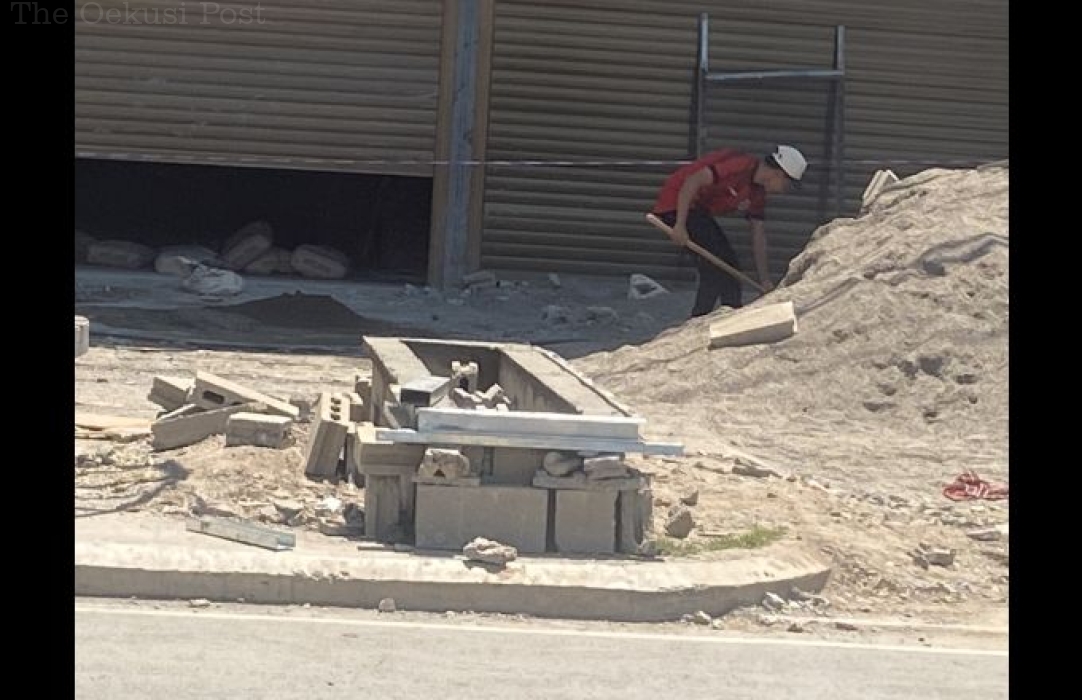
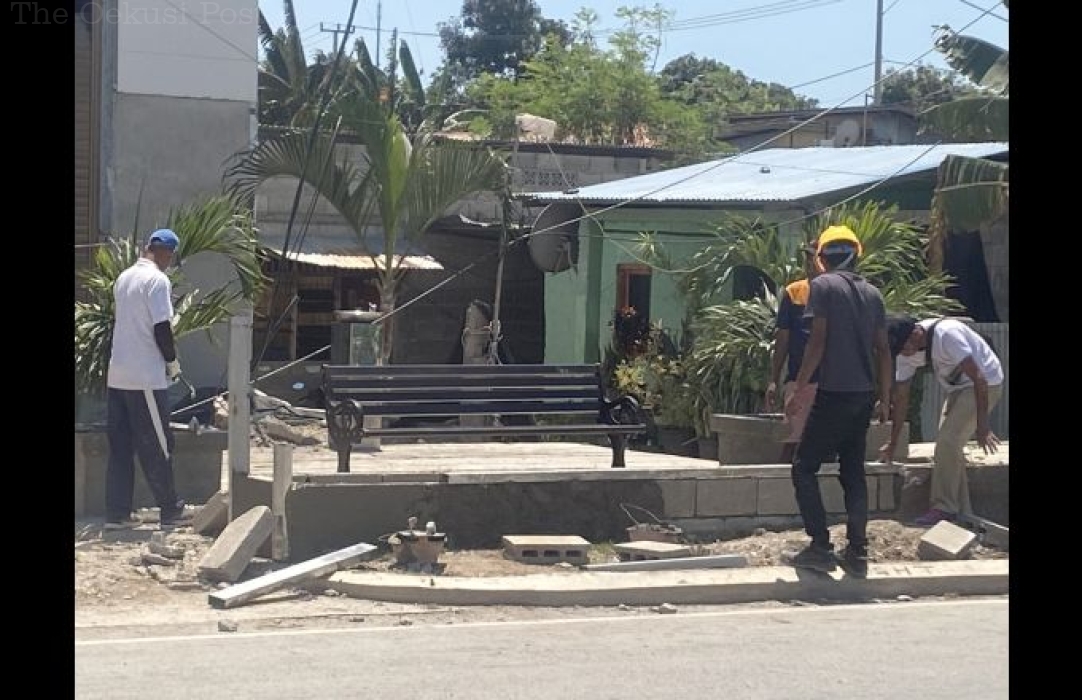
The Aimutin Public Park, there is also a Chinese shop there is looking for ways to facilitate consumers (clients) can access the shop. The shop owner decided on Thursday, September 17, 2026 to demolish the park with the reason to open a small road for pedestrians to enter the shop.
One of the government institutions responsible for ordering the country's capital is the Secretary of State for Toponymy and Urban Organization (SEATOU), Germano Santa Brites Dias, who does not like the attitude of the Chinese entrepreneur. SEATOU working together with the enforcement of Law and Order is the National Police of Timor-Leste (PNTL) to immediately react against by stopping the activity of the shopkeeper to prevent the destruction of the garden, but before reaching everything was destroyed.
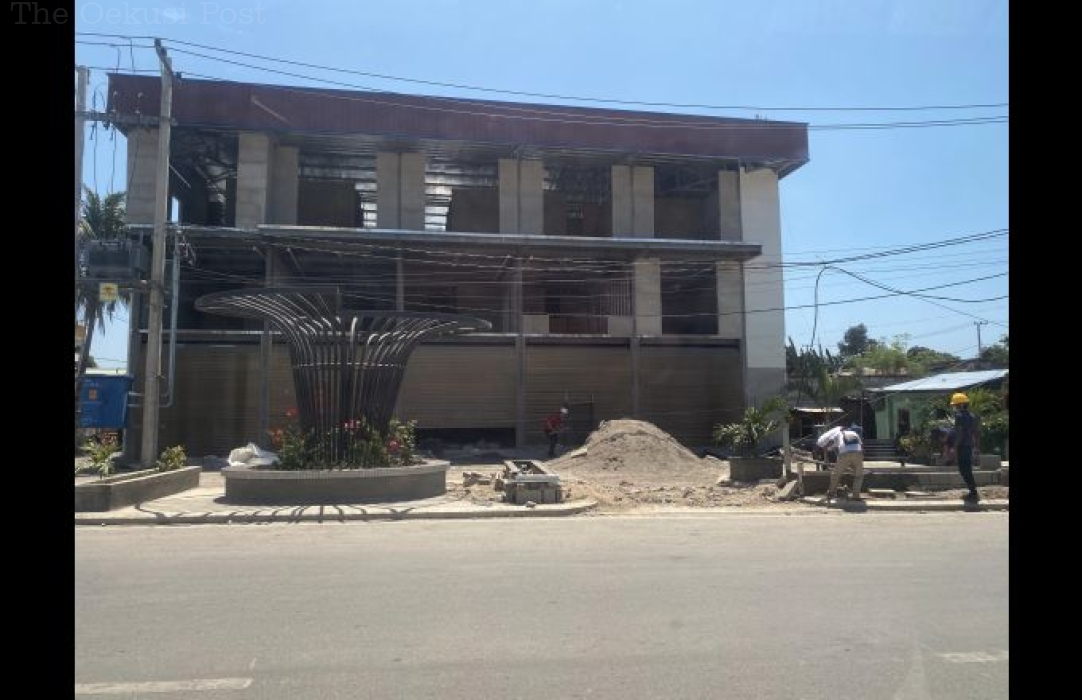
However, SEATOU has declared that the authorities will impose sanctions by imposing fines and pulling police tape to close the construction area.
"We impose fines and tape around the construction. They must repair the park to its original, before they can continue their construction," The Oekusi Post (TOP) quoted the statement of the Secretary of State for Toponymy and Urban Organization (SEATOU), Germano Dias Brites, who made it public through his official Fan Page on 17 September 2026.
SEATOU continues to appeal to all citizens, including companies and foreign citizens, to comply with the rules of public order and not to damage state assets made with people's money, to enrich the country's capital.
SEATOU managed to show its power by stopping the process of demolishing the destroyed garden, but still forced the Chinese businessman to return the garden to its origin.
This is a small-scale case. However, if we remove the scale factor, its format is almost identical to what happens with large-scale ASEAN member countries that receive waves of investment from Beijing faster than the government's ability to regulate them is very slow.
Sihanoukville is an example of real attention. A decade ago, the small town was a quiet coastal town in Cambodia, but in 2019, nearly 90 percent of local businesses are managed and administered by Chinese. Land rights advocacy groups accuse the investors of falsifying land ownership documents to dominate the property business in the coastal area, and rents are so expensive that Cambodians themselves cannot afford to live in their own area.
With great hope that, the capital Dili and the capital Lifau in Oe-Cusse Ambeno can not turn like Sihanoukville in Cambodia.
The growth of business activities in Sihanoukville is very fast without adequate licensing supervision. A building in Sihanoukville collapsed in 2019, killing 28 people, and the situation caused a provincial governor in Cambodia to lose his job. The city of Sihanoukville also became a magnet for online gambling operations that eventually led to money laundering. The Government of Timor-Leste through the meeting of the Council of Ministers on Wednesday, August 5, 2026, has approves plan to prevent and combat Scam Call Center and Online Game.
The capital of Vientiane (Laos) offers a different version of the same story, this time by design instead of neglect. In Boten, a Special Economic Zone on the Chinese border, the government granted a Chinese developer a decades-long lease, with the company answering more to the Chinese embassy than to Laotian government regulators. The case of the destruction of the Aimutin park is almost similar to what happened in Boten where the Chinese businessmen are more afraid of their Chinese Embassy than the regulatory authority (SEATOU). The Chinese businessman is no longer afraid of SEATOU, which eventually destroyed the garden built with the money of the entire Timorese people. The government took a long time to build the garden, but the Chinese businessman destroyed it in a few minutes.
The Boten Zone's first incarnation as a casino outpost became very large because of illegal debt, violence against players who could not pay the Chinese authorities themselves, eventually the Chinese government cut off its energy and telecommunications distributed and channeled into the area to force the Lao People's Democratic Republic (PDR) government to close had. When the Laos National Assembly considered expanding the same zone in 2023, it received strong rejection from the Boten zone community. The communities argue that the agreement gives more advantages to Chinese citizens than a domestic law would give to Lao citizens.
Back to Indonesia and the Philippines which have shown that even the largest and most capable states are not immune to the same test. Chinese-backed nickel factories in Sulawesi have repeatedly sparked worker protests over unsafe conditions and unpaid wages, including a clash in 2023 that left an Indonesian and a Chinese worker dead on the spot.
In the Philippines, China-linked online gambling (Online Game) operator POGOs stretched for years with light regulatory ties before investigations linked the industry to money laundering, trafficking, and worse, forcing President Ferdinand Marcos Jr. to ban the entire sector by 2024 and make the ban permanent the following year. In both countries, the issue that eventually became a national issue began with the spread of local disputes that the intervention of regulatory authorities illustrated was inadequate and too slow.
This is the process that connects the nickel industry area in Jakarta and the online gambling center in Manila with a small park in Aimutin-Dili that was damaged and destroyed by Chinese traders: not a structured plan, but a repetitive rhythm.
In one place, a company or a businessman sometimes wants to try to break down and violate a regulation and then be punished or not. If they are not punished, they will break down and violate these regulations until they fight each other again. If the fine applied is meaningless or the fine applied says to rebuild the garden, but then forget to leave it destroyed like this until the police line is also removed again, agencies and traders will continue to repeat the same rhythm.
Timor-Leste has not seen anything on the scale of Sihanoukville or Boten, and there is no evidence that the Aimutin park case is more than a single business making a single bad call about a garden. But the country is still in a crucial early period based on regional experience that suggests that the credibility of law enforcement must be firm before large capital influences arrive, while the State's response to minor violations becomes an issue that should be observed by investors, both foreign and domestic.
In this context, the application of fines by SEATOU to Chinese agencies and businessmen to rebuild the Aimutin park is a modest but real test of institutions in Timor-Leste being able to enforce a rule the first time it violates it, instead of repeatedly applying the fine once.